Sink Basin Types and Materials for Project Specification
Start with the basin, because every other part on the sink hangs off its footprint. Most project schedules end up choosing between three materials. Stainless steel dominates commercial kitchens: a dropped stockpot dents it at worst, and it goes through daily sanitizing without complaint. Porcelain and ceramic are the usual pick for bathrooms and public washrooms, where the glazed face wipes clean and nothing soaks in. Granite composite sits somewhere in between. It shrugs off scratches and hides wear in busy residential kitchens, though its weight is worth checking against the cabinet it will sit on.
Bowl layout is the next call. One large bowl takes sheet pans and stock pots that never fit in a divided sink. Two bowls let a kitchen wash on one side and rinse on the other, which suits a prep line where one person washes and another rinses. For stainless, ask for the gauge on the drawing: the lower the gauge number, the thicker the steel, and a thin basin drums loudly under a running tap. Sound-dampening pads on the underside take care of most of that noise. Whatever you pick, put the basin dimensions and gauge on the specification so every supplier quotes the same sink.
Drain Assembly Components and Their Role in Preventing Leaks
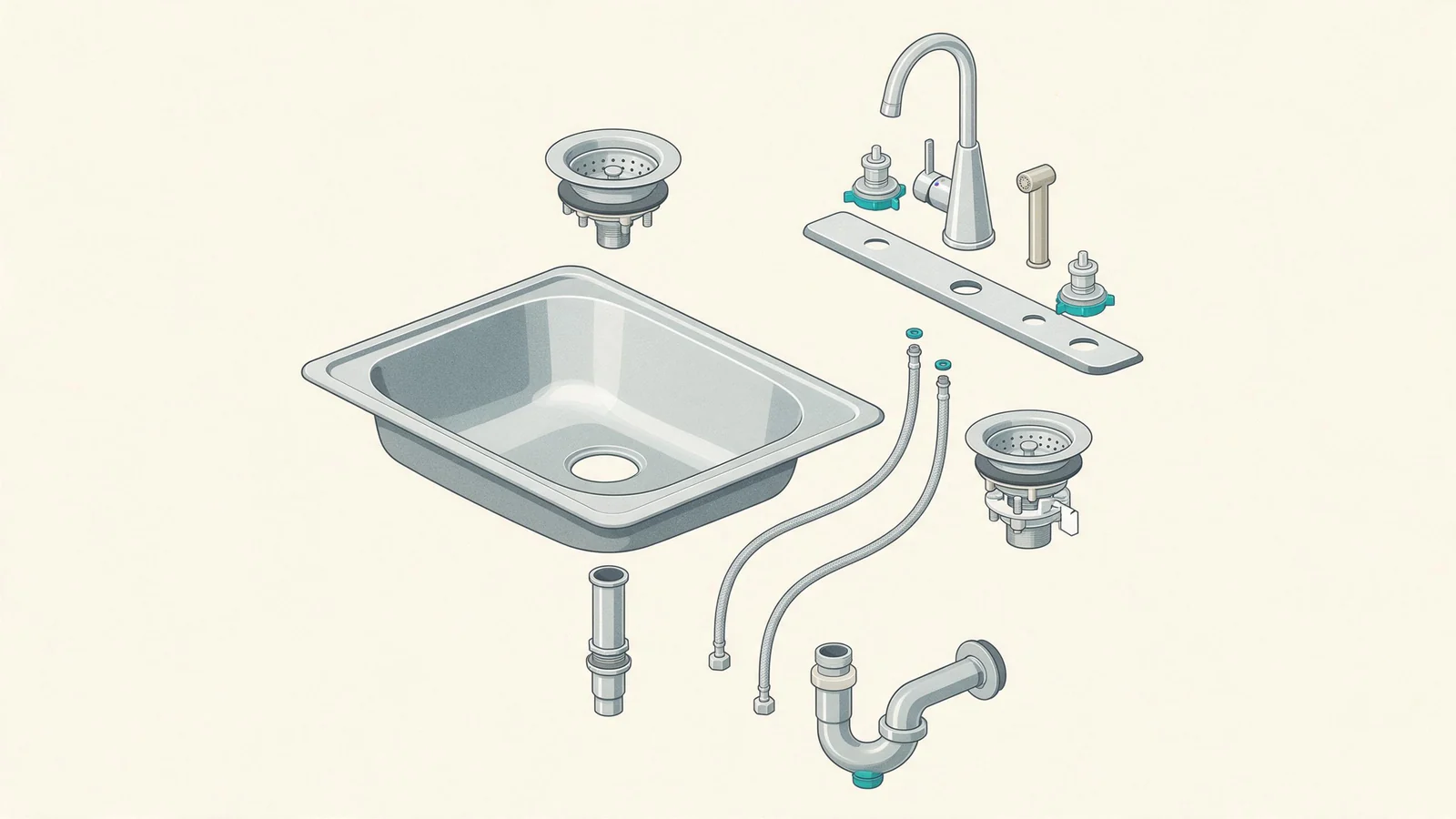
Follow the water down. It leaves the basin through the drain opening, passes the drain body and the tailpiece, and drops into the P-trap, the U-bend you see under almost every sink. Right in the drain opening sits the strainer, there to stop food scraps before they reach the pipe. Between drain body and sink there is a gasket, and if that joint is wrong it weeps. The P-trap keeps some water in its bend on purpose, because that small water seal is what blocks sewer gas from the building. This breakdown from a sink maker's parts guide shows the whole assembly.
Buy drain parts for the sink model you actually have, and for the plumbing code where it is being installed. Drain openings and thread patterns vary between models, and the wrong one shows up as slow drainage, a leak, or both. When a new sink does leak, look at three places first: strainer to sink, the tailpiece joint, and the P-trap connections. Usually it is a wrong gasket or washer, or a nut someone didn't tighten. On commercial jobs, confirm the drain will take a garbage disposal or grinder before ordering, and that it can handle the waste volume the sink will really see. Undersized drains clog.
Faucet Holes, Mounting Areas, and Faucet Compatibility
Faucet holes are the openings drilled in the sink deck or the countertop for the faucet and whatever mounts beside it. There are three common layouts. A single-hole faucet combines spout and handle, so it needs one hole. Centerset uses three holes set close together, with the body sitting on a single base. Widespread also uses three holes, but the spout and two handles are separate pieces joined underneath by flexible lines, so the holes sit further apart and the spread varies by model. Get the count and spacing right before the order goes in. A mismatch found on site means drilling into a finished counter, or a sink going back in its crate.
Mounting style changes where those holes live. A top-mount sink drops into the counter cutout and rests on its own rim, so the holes are often in the sink deck itself. An undermount sink hangs below the counter, the edge stays clean, and the holes move into the stone. Either way, the deck has to be thick enough for the faucet's mounting nut to grip. Soap dispensers, side sprayers and filtered water taps each take one more hole, so list them on the order. On a building with dozens of sinks, settle on one hole pattern and repeat it. Maintenance then stocks one faucet type instead of three.
Overflow Mechanisms and Their Importance in Public and Rental Spaces
An overflow is that opening near the top of the basin. It is what keeps water from spilling over when a drain gets blocked or someone leaves the faucet running. High traffic bathrooms need them to protect floors and cut down on water damage. The overflow channel gets molded into the sink body and ties into the drain line below the strainer. Some sinks come with a separate overflow piece that you have to line up during installation. Integrated overflows are part of the basin itself, so they are easier to clean and give you fewer places to leak.
Code requirements for overflows change depending on where the job is. Many commercial and multi family codes demand overflows on lavatories and sinks in public restrooms. Make sure the overflow connects to the drain line properly. A misaligned overflow gasket will leak behind the wall or under the cabinet. When you spec a sink, check that the model has an overflow and that the drain assembly has the matching overflow port. That coordination keeps you from getting callbacks and water damage claims.
Plumbing Connections: Supply Lines, Shut-Off Valves, and P-Traps
On a retrofit, flexible supply lines save your hide because nothing lines up the way you hoped. Rigid piping looks cleaner but you better measure everything twice. Shut-off valves get mounted in accessible spots under the sink, so you can cut water fast when something leaks, as noted in a kitchen sink parts reference. Ball valves see the most use since a quarter turn is all it takes and they rarely seize up.
The P-trap stops sewer gas from backing into the room, and you can get it in plastic or metal. Plastic traps don't corrode and go in quickly, metal traps usually brass or chrome-plated look more finished but hit the budget harder, and the trap has to line up with both the drain outlet height and the wall connection. Local plumbing codes tell you the trap diameter and venting you need, so check with the project's plumbing engineer to stay compliant.
Mounting Hardware and Installation Methods for Different Sink Styles
Top-mount and undermount sinks don't use the same hardware, and the labor is not the same either. A top-mount rim sits on the counter and gets sealed with caulk or a gasket. That keeps installation quick and it works with most countertop materials. Undermount sinks bolt on from below with clips and brackets, and then the countertop edge gets sealed. You get a smooth surface that wipes clean, but the fabrication has to be more precise so the labor runs higher.
Clips and brackets are what actually hold the sink up. Match the clip to the sink model and to the counter thickness, otherwise the sink will sag or pull away over time. Pick a sealant that suits both the sink material and the countertop, not whichever tube is on the van. Plenty of stainless sinks ship with sound-dampening pads already stuck on, which cuts noise and condensation, and for a quieter job you can add more insulation underneath. Before the installers arrive, check three things against the drawings: cabinet opening, countertop cutout, faucet hole positions. Fixing any of them on site costs far more than checking.
Optional Accessories and Integrated Features for Enhanced Functionality
Most commercial kitchens run a garbage disposal, so the sink needs a drain opening that fits one and enough depth below for the unit itself. The disposal hangs off the sink drain on its mounting assembly. Pick the disposal model first, then confirm it fits the sink you are ordering, not the other way round.
Soap dispensers, filtered water taps and anything else that mounts on the deck needs its own hole. Plan them when the sink is first specified. Once it is on the truck, it is too late.
Workstation sinks have ledges inside the basin for cutting boards, colanders and drying racks to slide along, which keeps clutter off the counter. Ordering accessories with the sink means they arrive together, installers aren't waiting on a second delivery, and there is one less supplier to chase.
Quality Control and Certification Considerations for Importers
Importing sink components? Ask for the paperwork before you ask for the price. Sanitaryware conforms to EN or ANSI standards depending on the export market, so the quote should name the one that applies to your order. Third-party inspection reports and factory audit documentation are available on request for any product line. Use them to check that bulk production matches the samples you approved, instead of filing them away.
Pre-shipment inspection and container loading verification happen as standard. Inspectors go over dimensions, surface finish, and packaging before anything leaves the factory. Photographs of container loading record the packing. A sample approval process confirms production matches your specs, so ask for a pre-production sample and sign off before manufacturing starts. That cuts the risk of non-conforming goods.
| Component | Function | Common Materials |
|---|---|---|
| Basin | Holds water and defines sink size | Stainless steel, porcelain, granite composite |
| Strainer | Catches debris in drain opening | Stainless steel, plastic |
| P-trap | Prevents sewer gas from entering | Plastic, brass |
| Faucet | Delivers water to the sink | Brass, stainless steel |
| Overflow | Prevents water spillover | Integrated in basin |
For more guidance on related fixtures, see our articles on kitchen sink dimensions and ADA compliant bathroom fixtures.