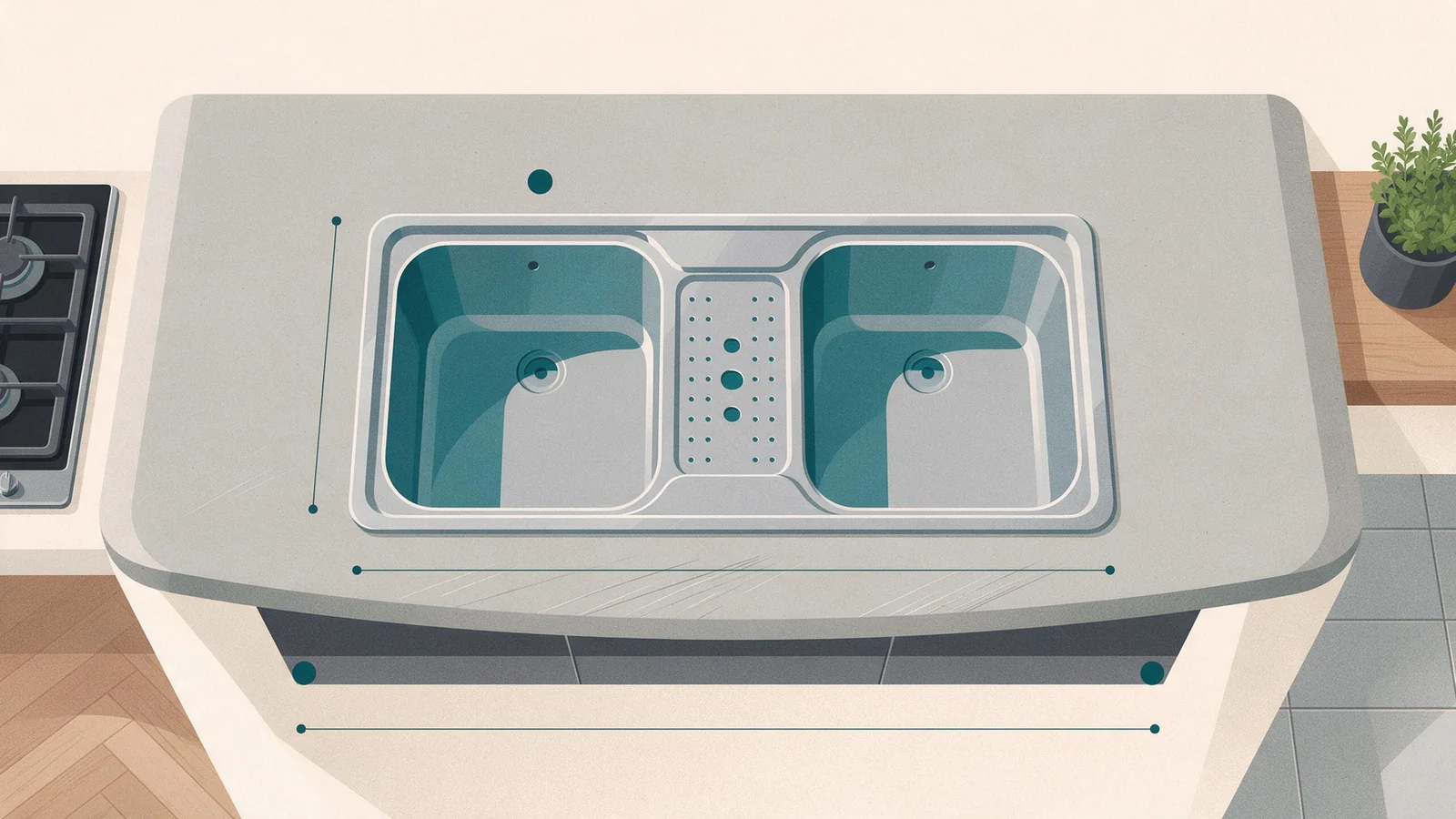
Standard Kitchen Sink Dimensions by Type
Single bowl, double bowl equal, double bowl offset, triple bowl. Those are the layouts you will see again and again. Widths vary by manufacturer and by the cabinet the sink sits in.
Front-to-back depth and basin depth also run in common ranges. Shallow sinks go 6 to 8 inches deep. Deep sinks go 8 to 12 inches, per a sink maker's size guide. Farmhouse or apron sinks change the game because the front panel extends past the counter edge. The cabinet opening has to fit the apron, not just the bowl.
Metric equivalents help when comparing product drawings. A 22-inch sink is 56 cm or 559 mm wide, a 30-inch sink is 76 cm or 762 mm, and a 33-inch sink is 84 cm or 838 mm. That matters when you review drawings from Foshan suppliers or check container loading plans.
Cabinet Size vs. Sink Size Compatibility
Plan on the sink being at least 3 inches narrower than the outer cabinet width, as published trade guidance suggests. That leaves room for mounting hardware and the cabinet walls.
Multifamily builds usually pair a 27-inch sink with a 30-inch cabinet, a 30-inch sink with a 33 to 36-inch cabinet, and a 33-inch sink with a 36-inch cabinet. For a 33-inch base cabinet, a 30-inch sink is the recommended fit and the most common pairing on multifamily projects. For a 36-inch base cabinet, either a 30-inch or 33-inch sink fits, depending on project tier.
Undermount sinks need more inside clearance than top mount sinks. An undermount sink attaches below the counter, so the cabinet interior has to be wide enough for the bowl plus the mounting clips. A top mount sink drops into a cutout, the rim hides the edge, and the cabinet can be slightly tighter. Always measure the cabinet interior width between the side panels before choosing a sink.
How to Measure for a Kitchen Sink Replacement
Start with the existing sink or cutout. Length is left to right, width is front to back. If the old sink is still installed, measure the visible rim. For an undermount, measure the cutout in the counter.
Basin depth is measured with a straightedge across the top of the sink and a tape measure down to the drain. That tells you how deep the new sink can be without hitting pipes or the cabinet floor.
Mounting type changes the measurement. A drop-in sink needs a cutout slightly smaller than the rim. An undermount sink needs a cutout that matches the bowl opening. So check the cabinet interior dimensions for clearance before you order.
Single Bowl vs. Double Bowl Sink Sizes
Single bowl sinks run 22 to 36 inches wide. One big basin. You can wash a full sheet pan without fighting the divider. 30 inches is the size most standard kitchens get.
Double bowl sinks take more width than a single bowl, so they go into the larger base cabinets. The bowls are either the same size or offset, one bigger than the other. Offset is the one I'd put in my own kitchen. You get a large washing area and a smaller prep or drying side. Equal splits are fine if two people cook at once, but if you wash large pots, an offset split means the bigger bowl actually fits them.
Small kitchen? A 22-inch single bowl saves counter space. Big family or heavy cooking? A 32-inch double bowl gives you more room. It comes down to how many people use the kitchen and what they cook.
Kitchen Sink Depth: Shallow vs. Deep
Shallow sinks run 6 to 8 inches deep. That is easier to reach for shorter users, and there is more room under the sink for storage or a garbage disposal. Deep sinks run 8 to 12 inches. You can hide tall pots and hold more water. But you bend more, and under-sink space gets tight.
ADA changes the math. Standard kitchen sinks are usually 9 to 10 inches deep. An ADA-compatible undermount sink is commonly around 5.5 inches deep, per published trade guidance. ADA kitchen sinks also need an offset or rear-set drain. Otherwise the drain intrudes into the required knee clearance zone.
Depth affects faucet clearance and splash too. A deep sink with a low faucet? Hard to fill a tall pot. A shallow sink with a high faucet splashes. Match the faucet height to the basin depth.
Farmhouse and Specialty Sink Dimensions
Farmhouse sinks run 30 to 36 inches wide. The apron front sticks out past the cabinet, so you either modify the cabinet or order it with a special front cutout. The apron itself is usually a few inches deep. Exact dimensions vary by design.
Bar or prep sinks are smaller, typically 9 to 25 inches wide. They fit in islands or wet bars. You can rinse glasses or prep food away from the main sink. Workstation sinks are larger, often 30 inches or more, with ledges for cutting boards, colanders, and drying racks.
Custom sink options are available for luxury or commercial projects. Send the sink sizes you need with your enquiry and drawings, and Winway's sanitary ware factory in Foshan quotes against them. For hotel or apartment projects, custom sinks can match the cabinet layout and the project's design standards.
Choosing the Right Sink Size for Your Kitchen
Look at your countertop space before anything else. You need room on both sides of the sink for prep and drying. Too wide, and you lose your work area. Too narrow, and big pots get awkward. So match the sink to the kitchen style and the cabinet it sits in. A farmhouse sink looks right in a traditional kitchen. A slim single bowl fits a modern one. But check the cabinet width first. If you wash big pots or host a lot, a deep single bowl or a large double bowl handles it. With multiple cooks, a double bowl means one washes while another preps. And remember, bigger sinks need more cleaning and eat into the cabinet below, leaving less space for pipes and bins.
Kitchen Sink Size Reference Tables
These tables cover sink widths, cabinet pairings, and depths. Quick reference for spec work.
| Sink Width | Recommended Cabinet Size |
|---|---|
| 23 inches (58 cm) | 27 inches (69 cm) |
| 27 inches (69 cm) | 30 inches (76 cm) |
| 30 inches (76 cm) | 33 to 36 inches (84 to 91 cm) |
| 33 inches (84 cm) | 36 inches (91 cm) |
| Sink Type | Typical Width | Typical Depth |
|---|---|---|
| Single bowl | 22 to 36 inches | 6 to 12 inches |
| Double bowl equal | Wider than single bowl | 6 to 12 inches |
| Double bowl offset | Wider than single bowl | 6 to 12 inches |
| Farmhouse | 30 to 36 inches | 8 to 12 inches |
| Depth | Best Use |
|---|---|
| 6 to 8 inches | Shallow: easy reach, more under-sink storage |
| 8 to 12 inches | Deep: large pots, high volume washing |
| 5.5 inches (undermount) | ADA-compatible |
| Inches | Centimeters | Millimeters |
|---|---|---|
| 22 | 56 | 559 |
| 23 | 58 | 584 |
| 27 | 69 | 686 |
| 30 | 76 | 762 |
| 33 | 84 | 838 |
| 36 | 91 | 914 |
Importers also need to think about packaging and freight. A 30-inch sink in a double-walled box takes more space than a 23-inch sink, so container counts shift. Winway helps customers fill containers by model and quantity without wasting space. See kitchen sinks or basins and faucets for more from our Foshan factory.