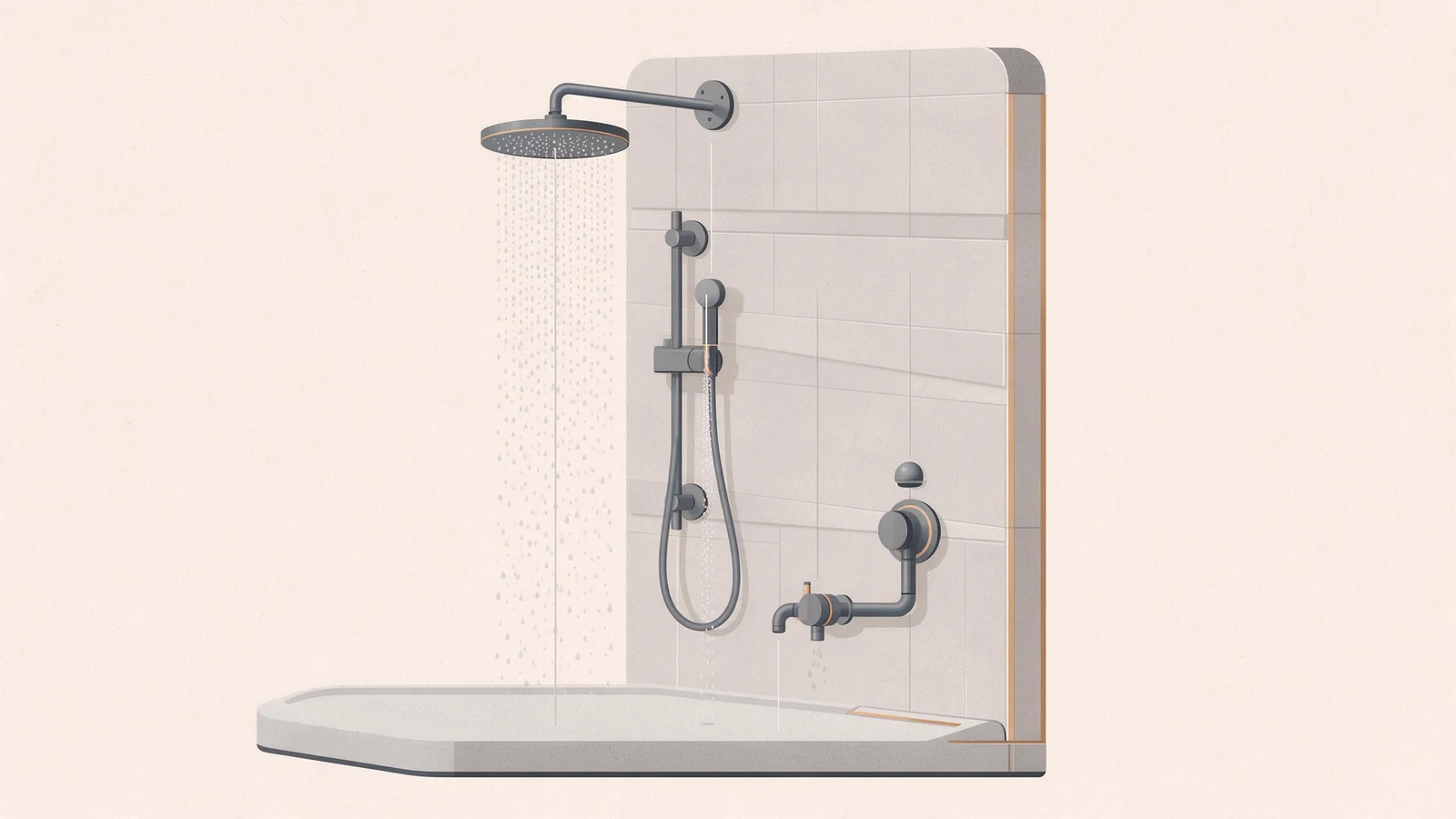
Standard Shower Head Height and How It Is Measured
Wall-mounted shower heads typically sit at 80 inches from the finished floor. That is the starting point most plumbers and contractors use. The finished floor means after tile or stone goes in, not the subfloor. Measure from the wrong reference and the install is off.
The rough-in height is where the water supply pipe lands inside the wall before finish goes on. It is usually 80 inches above the finished floor. The finished height is where the head actually sits after the wall is done. Wall finish thickness changes the gap between those two numbers.
The workable range for wall-mounted heads is 68 to 86 inches, but most jobs land in the middle. To measure, run a tape straight up from the finished floor to the center of the water outlet pipe. That center point is the number you put on drawings and purchase orders.
Recommended Heights for Different Shower Head Types
A wall-mounted shower head is usually put in at 78 to 82 inches. That gets the spray above most heads while staying easy to reach for cleaning and adjusting.
Rain shower heads sit higher, 85 to 90 inches off the floor. The extra distance lets water spread into a soft, even rainfall pattern. Mount one too low and the spray feels concentrated. That defeats the purpose.
Handheld shower heads on slide bars give the most flexibility. Bracket height is typically 72 to 78 inches. The bar itself adjusts from about 48 inches up to 78 inches. That range works for standing adults, seated users, children, and cleaning tasks.
Ceiling-mounted overhead showers are usually placed between 7 and 9 feet from the shower floor. Exact position depends on ceiling height, shower head size, and the coverage you want. In hotel and apartment projects, they often get specified for a premium look.
Height Adjustments for Different Users and Project Types
For a mixed user base, figure the height off your tallest expected user, then add 3 to 6 inches over their head. Tall guests don't stoop. In hotels and public facilities, operators often put shower heads above 80 inches. That way nobody complains.
Accessible showers have their own rules. The ADA Standards put accessible shower heads between 38 and 48 inches off the finished floor. A seated user can reach that. A handheld on a slide bar is often the best pick for accessible stalls. It works for seated and standing users.
Slide bars also make sense in households with mixed users and in hospitality work. People set the shower head where they want it without tools. For hotels and apartments, a slide bar with a handheld means you skip custom rough-ins. The bathroom stays flexible.
Shower Head Flow Rate (GPM) Basics and Regulations
GPM means gallons per minute. It is how much water comes out in one minute at standard pressure. That is not the same as water pressure. Pressure is the force in the pipes. Flow rate is the volume you get. A shower head can have high pressure and low flow, so it feels strong while using less water. The federal max in the U.S. is 2.5 gallons per minute. Some states go lower. Check local codes before you specify anything.
The federal standard applies to each head. A shower with multiple heads has to meet the limit on every fixture. If you are going after green building certification, you will likely need WaterSense. Those heads are capped at 2.0 gallons per minute and go through performance testing.
Comparing Common GPM Ratings
Shower heads come in a few standard flow rates. 1.5 GPM saves the most water, but it often feels weak, especially if the building has low pressure. 1.8 GPM sits between that and the WaterSense line, a balance of efficiency and comfort. That makes 2.0 GPM the usual pick for commercial bathrooms, because it meets WaterSense and still performs fine. 2.5 GPM is the strongest flow federal law allows, though it uses more water and energy.
| Flow Rate | Typical Use | Water Use |
|---|---|---|
| 1.5 GPM | Maximum conservation, low pressure buildings | Lowest |
| 1.8 GPM | Between maximum savings and the WaterSense line | Low |
| 2.0 GPM | WaterSense, general commercial | Moderate |
| 2.5 GPM | Federal maximum, strong rinse | Highest |
Hotels and apartments typically spec 2.0 GPM. It satisfies most green building programs and still gives an okay shower. Luxury properties sometimes go with 2.5 GPM for a stronger spray. Check local regulations first.
How to Choose the Right GPM for Your Project
Water pressure drives this decision. Old buildings and high-rise towers often have low or fluctuating pressure. A lower GPM shower head with air injection can feel stronger there than a standard high-flow head. Winway's PVD shower system uses air-injection technology to keep the spray powerful in low-pressure buildings.
User preferences matter next. Some want a strong rinse. Others care about water savings. A slide bar with a handheld shower head lets users adjust spray pattern and height, which offsets a lower flow rate. For staff showers in dormitories or gyms, a simple fixed head at 2.0 GPM is practical.
Check local plumbing codes and state regs. Some jurisdictions require WaterSense labeled fixtures for all new construction. Others cap flow at 1.8 GPM. Shower head size and design also change how the flow feels. A large rain head at 2.0 GPM may feel weak because the water spreads over a wide area. A small concentrated head at the same flow feels strong.
Adjusting Shower Head Height Without Major Plumbing Work
If the rough-in lands too low or too high, fix the finished height without opening the wall. Adjustable shower arms thread onto the existing pipe. They move the head up or down by several inches and angle it where you want it.
Swivel ball adapters change spray angle, not height. Use them when the head is at the right height but the spray direction is off. S-style arms add 4 to 10 inches. Builders use them all the time when a rough-in came in too low.
Slide bars mount to the wall and let a handheld head slide up and down. That makes them the most flexible option for multi-user bathrooms and accessible showers. No plumbing changes needed. On commercial jobs, spec the slide bar from the start and you skip the change orders later.
Water Usage and Cost Implications of Shower Head Flow Rate
Multiply flow rate by shower time to get water use. A 10-minute shower at 2.5 GPM uses 25 gallons. Drop to 2.0 and it is 20 gallons. At 1.8 GPM, 18 gallons. Daily use over a year adds up to thousands of gallons per shower head.
For a hotel with 100 rooms, going from 2.5 to 2.0 GPM cuts water and energy costs. Hot water is a major energy cost in hospitality. Less hot water to heat means lower utility bills. Low-flow shower heads also reduce load on water heaters and pumps, which can extend equipment life.
Lower flow rates strain municipal water supplies and wastewater systems less. Many green building certifications award points for water-efficient fixtures. For project buyers, specifying WaterSense or lower-flow shower heads is a simple way to improve the building's sustainability profile without sacrificing guest comfort.
When planning a commercial bathroom, coordinate shower head height with other fixtures. Shower valves are usually roughed in at 40 to 50 inches above the floor. Grab bars, benches, and enclosures must all work together. Winway supplies shower enclosures and toilets that can be specified alongside shower heads for a coordinated bathroom package.